Garbles from Aligarh

IMG_5655
Learning to use HF radio outside the comms shop. 

Shortwave radio is an especially nerdy slice of the radio frequency spectrum. Just typing the words “radio frequency spectrum” already qualifies me as a nerd to some extent. I am aware of this fact. But really, shortwave radio, for the most part, far exceeds my nerd  knowledge.

Nowadays, shortwave radio is used primarily by ham radio operators (most of whom are old white guys in their attics) and religious broadcasters like World Adventist Radio. But, it’s also used by folks in developing countries who don’t have reliable Internet, as well as some news agencies like the BBC and Voice of America.

Before coming to McMurdo, I had never used shortwave or HF (High Frequency) radio. Now, I talk to field camps, airplanes, and South Pole station on HF radio on a regular basis. It’s a highlight of my job.

It’s fun to live someplace where an old(er) technology is so commonplace, and it’s more glamorous than our other older technologies like corded phones and pagers. We use HF to communicate with field camps who can’t use our VHF radio repeaters. Sometimes we can reach camp staff faster on HF than we can with our satellite phones. And on night shift, when the radios are hissing and whining all night in MacOps, I can sometimes hear pop music and Pashto-language conversation from All India Radio in Aligarh in northern India.

Hearing live broadcasts from India whilst living in Antarctica is pretty neat.

On Christmas Eve, the McMurdo Christmas Choir, McMurdo’s one-note singing sensation group called The Monotones, and our vibraphone-playing firefighter came into MacOps and played music live on HF radio for all the field camps. Several camps performed their own music back, and it was such a delight to hear their music, coming to us live from hundreds of miles away. I have an acquaintance from New Jersey who was on the ice for a few weeks, and he is heavily involved in the ham radio community. He let ham operators know about the broadcast a few weeks in advance, and I was told later that the McMurdo Christmas Carol broadcast was heard as far away as Sweden.

I have hosted a lot of radio shows. I never thought that would include MC-ing a troupe of musicians at McMurdo Station, South Pole Station, and several camps in between, on HF radio.


Helo…. It’s Me…

This afternoon I told one of my co-workers that I love my job if for no other reason than being able to see seals, penguins, and field camp bound-helicopters outside my office window every day.

That and being able to say things like “That’s affirmative, Shakleton!” on HF radio without any irony.

I would apologize for not writing in three weeks, but I’m not sorry. I’ve been busy, and while night shift usually affords me the time to write, I’ve been busy with job applications for next season. Yes, I am coming back next season, if my employer and the United States Antarctica Program will have me.

Some highlights from the last three weeks include attending the Vehicle Maintenance Facility Christmas party, unicycling in the fitness room with a co-worker’s borrowed unicycle, playing with radios in the ham shack, having my friend Deany show me how to operate a forklift, enjoying mild weather (we hit 34 degrees on New Year’s Eve), performing at Icestock (more on that later), and celebrating my 26th birthday by watching softball games in the sun with friends.

I’m also making tentative plans for my first six weeks post-Ice, which will likely involve four weeks of volunteering at a Buddhist meditation center in southeast Australia and visiting Auckland and more of the north island in New Zealand.

I’ve been here long enough now that McMurdo Station feels like my new normal. It feels normal to sleep on the top bunk in a dorm room. It feels normal to sleep with a blackout curtain on the window. It feels normal to eat cafeteria food 24/7, to have slow Internet, to get all my news from the dog-eared copies of “The Times Digest” that show up in the galley (cafeteria). It feels normal to wash and hand sanitize my hands before entering the galley, and to have unlit candles on my birthday cake due to the high fire risk in Antarctica. It feels normal to make phone calls on a phone that looks older than I am, to walk on volcanic rock, to see seals every day, to work 12-hour shifts, to talk to field camps and South Pole station on shortwave radio, to have free pizza and yoga classes available every day, to get free clothes from “Skua” (our Goodwill at McMurdo), and to go weeks without fresh vegetables.

Bottom line, McMurdo feels like my home. Good and bad, I like living here. I like the simplicity. I like the people. I like always being busy, either with work or with extra activities. It can be monotonous, and I sometimes miss trees, almost-daily kale salads, and having a Walgreens available.

But more often than not, I feel so lucky to be here.

Dial 35 Digits

A lot of people talk, in conversation, personal blogs, and wide-release movies, about Antarctica’s isolation.

It’s true that the research stations in Antarctica are some of the most isolated communities in the world. Most of don’t take a 13-hour flight to New Zealand and another five hour flight on a C-17 U.S. Air Force plane to Antarctica to get to their home and place of work for the season.

Every now and then, the reality of how isolated I am and how far I am from home hits in me with a heaviness in my chest and a twist in my heart. I can’t take a bus back home. A flight out of here requires a giant mountain of logistics, and only happens if you’re seriously ill or injured and the small clinic here can’t treat you. The Internet is quite slow at times, and I have to use a phone card and dial 35 digits to talk to anyone at home.

But true homesickness has only hit me a few times, and it’s never lasted more than one day. Between working 54 hours a week and participating in band, knitting group, library, craft room, and other miscellaneous parties and events, I haven’t had a lot of time to keep up with my world back home.

And I am so far from home, and living such a different life with such new, different people, that it’s almost easier to separate myself from my old life. Having a Facebook connection that moves at a glacial pace (haha, glacial) keeps me disconnected even more. And frankly, I think that’s better for me. I spent the last two and a half years living in the same wonderful community with roughly the same people, and had three years at the same job. I got comfortable. I “settled down.” Now, since early October, I have been living in a wildly new home in a hilariously isolated place with a new job and ALL the new people. There is so much newness in my life, I think trying to balance my community and activities back home with all the newness here would make me crazy. It would be like trying to be two different people at once.

I love and miss my Madison community, but it rarely feels like a physical, homesickness ache. It’s like I’ve tuned myself out of my life back home for the sake of my mental health. Trying to establish the McMurdo community as my new community is a survival tactic. And with my constantly changing, 24-hour shift schedule, it’s not easy. I have little pockets of a social life, making a few friends here, another friend there, and trying to form a close community when my newness to this community and work schedule sometimes make that difficult.

Living at a U.S. research station adds another dimension to this isolation. Even though I’m over ten thousands miles from home, McMurdo Station is very American. We use U.S. currency, drink American booze, watch American football on the sports channel, drive on the right side of the road, and have dog-eared copies of “The Times Digest” sitting around the galley, so we can keep up with what’s going on back home and around the world even when The New York Times homepage won’t load. We are far from home, and yet we are not. We are on a new continent but not a new country. It’s like a little piece of America has been transplanted to this distant, frozen world. McMurdo Station could be moved someplace in the U.S. and it would feel exactly the same.

Except in the U.S, there would be trees. And it might be warmer. And I might be able to stream my favorite radio station.

Photo on 12-10-17 at 7.33 AM
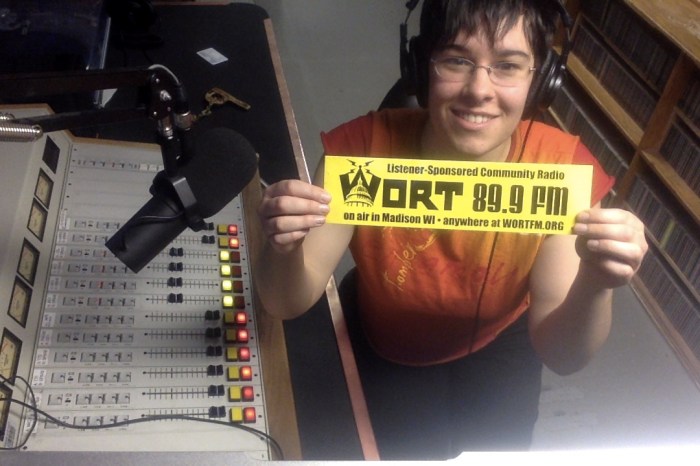
Sending WORT radio belated birthday greetings from Ice Radio. I think this might be the world’s southernmost WORT radio sticker sighting. 


“What If I Drown Michelle!?”

Late in November I got to be a dive tender for one of the grantees and three staff divers.

Dive tender = someone who assists with small tasks during a dive

Diving is a world I know nothing about. I live 800 miles from the nearest ocean, I’ve never been a strong swimmer, and I’ve never even gone snorkeling because the thought of inhaling too much water and drowning has kept me far, far away from any activity that involves breathing one or 50 feet underwater with only a few pieces of equipment keeping me alive. I think the closest I’ve ever come to diving was using flippers and goggles in swim class at the YMCA when I was maybe six.

But that did not dampen my enthusiasm for dive tending one bit. My friend Michelle, one of the grantees in the USAP’s Artists and Writers program, asked me if I wanted to be a dive tender for one of her dives, and I was all over it.

Help someone do an ICE DIVE IN ANTARCTICA?!? Yes please.

So I went down to the dive hut near the edge of the sea ice and helped Michelle don about five layers of gear, and hauled several duffel bags and metal tanks into the pisten bully we would drive out to the dive hut, which was about 100 feet onto the ice.

Pisten bully = Small, boxy tracked vehicle often used in polar regions for transportation. They are truly adorable.

We rode in the pisten bully out to the orange and blue dive hut (sometimes called a fish hut), and hauled the gear into the hut. I helped Michelle with the last of her gear, which involved making sure there was no hair between her skin and the seal of her drysuit hood. Otherwise, water can get in, and that is really bad. As I was pushing her hair under the hood I kept thinking, what if I do this wrong? What if I drown Michelle!?

But Michelle, and everyone else, was fine. Once they were ready, the four divers slipped through the four-foot-wide hole into the icy water, and I lowered a metal-and-cloth ladder into the hole for them to climb up.

Then I sat and stared into the dark blue water. All I could see was the occasional flash from an underwater camera and the faint outline of equipment at the bottom.

I also had one of the firefighters at the ob tube take photos of me lowering the ladder into the water (Thanks Josh!)

The divers were in the water for 30 minutes, but it felt like ten. Before I knew it, I was hauling tanks and cameras out of the water as they were handed to me, and helping Michelle out of her gear back at the dive shack. Time goes by when you’re trying to take in everything and marveling at the experience. Before coming to the ice a friend had shared a video of an ice dive at McMurdo station, filmed by videographers from The New York Times. I watched that video several times. And now here I was, possibly sitting inside the same hut that the Times journalists had visited.

Huh.


The Craft Room

As well as the library, my other semi-regular volunteer spot is the craft room, located in building 155.

Being a craft room attendant involves opening up the craft room, putting the sign out in the hall, tallying how many people stop by during your shift, telling people where the X craft supply is kept, and tidying as needed.

The craft room has three sewing machines, two embroidery machines, mountains of scrap fabric and yarn, and supplies for painting, drawing, jewelry-making, sewing, knitting, embroidery, leather working, screen printing, and I don’t even know what else.

Since I’ve been here, I’ve made some postcards, some little posters for my dorm, a pair of earrings, and a LOT of patches on the embroidery machine.

Before coming here I didn’t even know embroidery machines were a thing. They are, and they are amazing. I have more ideas for patches than I’ve had time for. I’ll probably do a post later on dedicated entirely to patches.